
Pores have long been typical defects that the metal 3D printing industry strives to eliminate.However, renowned research institutions represented by Germany’s Fraunhofer Society are breaking this conventional perception.
They have made us realize that once pores change from random to controllable and designable,they are transformed from defects into a function.
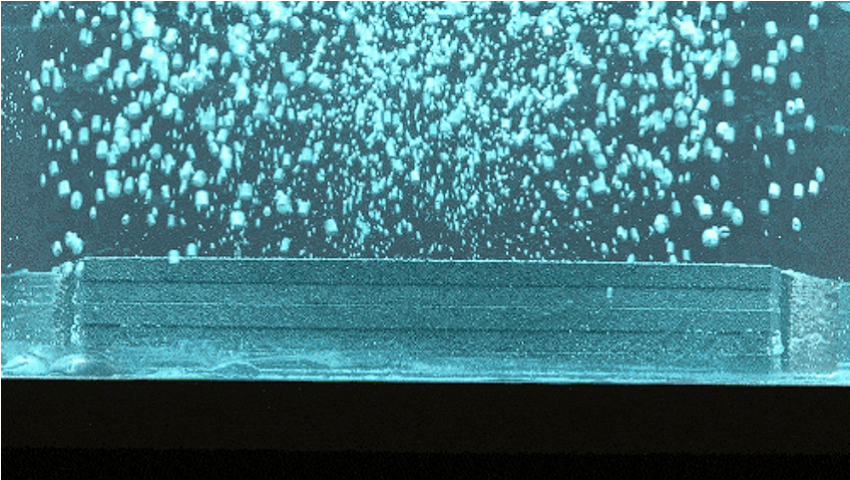
Fraunhofer's Metal 3D-Printed Functional Structures Based on Pores
As noted by 3D Printing Technology Reference, there is already such an enterprise in China that has taken porosity control to the extreme.It has developed a practical 3D-printed conformal porous steel technology, solving a long-standing problem that has plagued the mold industry, and allowing us to rethink the question: Are pores friend or foe?
This product will be unveiled at the upcoming TCT Asia Exhibition next week.Users who are interested or have questions are welcome to communicate with the team on site!
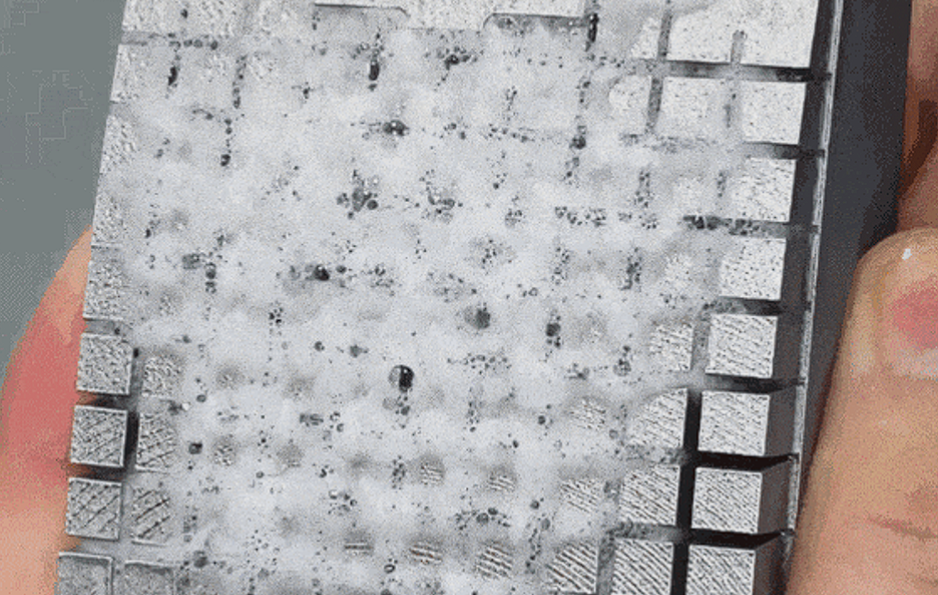
ESU Laser's 3D-Printed Porous Steel Based on Engineered Porosity
"Suffocating" Molds: An Underestimated Manufacturing Challenge
During injection molding, molten plastic is injected into the mold cavity at high speed and pressure, compressing air inside the cavity into corners and end zones. If the gas cannot be vented in time, it will cause appearance defects such as short shots and discoloration, collectively known as trapped air.
Traditionally, trapped air is solved by machining venting grooves or embedding porous steel at key positions.
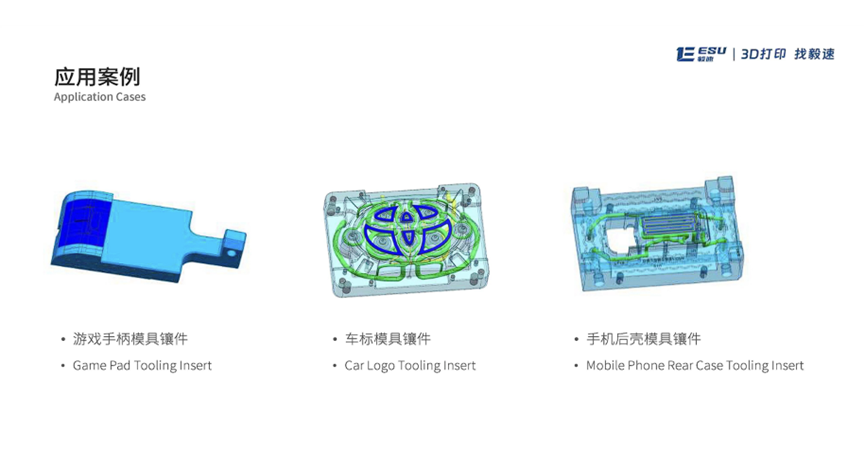
However, modern products are becoming increasingly complex, such as luminous emblems for new energy vehicles, sweeping robot rollers, precision mobile phone casings and other consumer goods.These molds have many dead corners in the cavity and limited runner design, making venting grooves no longer sufficient.
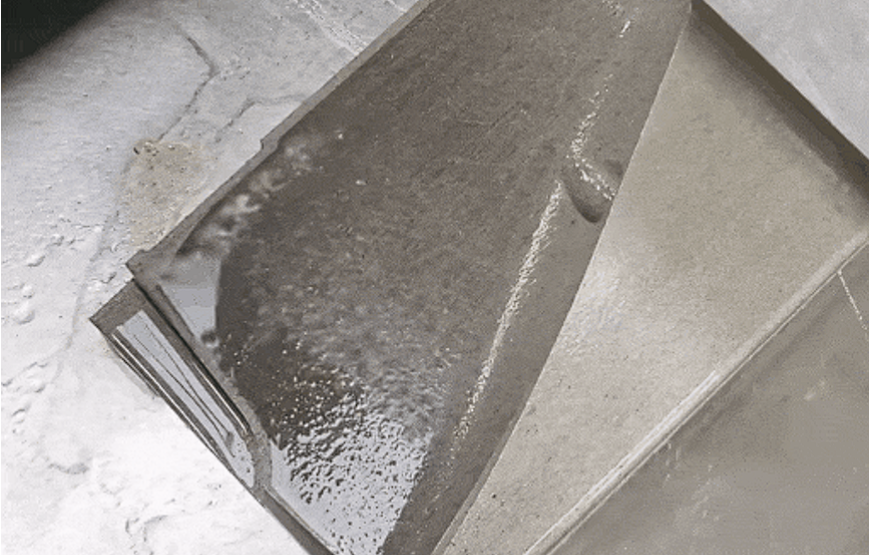
Porous steel is another solution. It is a tool steel with uniform microporous structure, combining strength and air permeability, allowing gas to escape through its micro holes. However, conventional porous steel is produced by powder metallurgy, with randomly distributed internal pores, and suffers from three major drawbacks:
First, limited in placement. Porous steel must be inserted as separate inserts into the mold and cannot be freely shaped along curved product surfaces.
Second, reduced mold strength. Installing inserts requires splitting the mold, lowering overall structural strength, and the joint interfaces become potential failure points.
Third, uncontrollable internal structure. The porosity from powder metallurgy is random, and pore size consistency cannot be guaranteed, resulting in uneven air permeability.
3D Printing: Metals That Can Breathe
ESU Laser did not simply imitate traditional porous steel.Instead, it redefined the way “air permeability” is achieved by leveraging the inherent advantages of 3D printing technology.
To understand ESU Laser’s technical approach, we must first recognize that porosity in metal 3D printing can be precisely controlled.
In the LPBF metal 3D printing process, the material forming result is determined by multiple parameters:laser scanning path, power, scan spacing, layer thickness, and others.
These parameters can be carefully optimized to achieve full melting and a density of over 99.9%.They can also be intentionally tuned to achieve precise control over pore size, porosity, and spatial distribution.
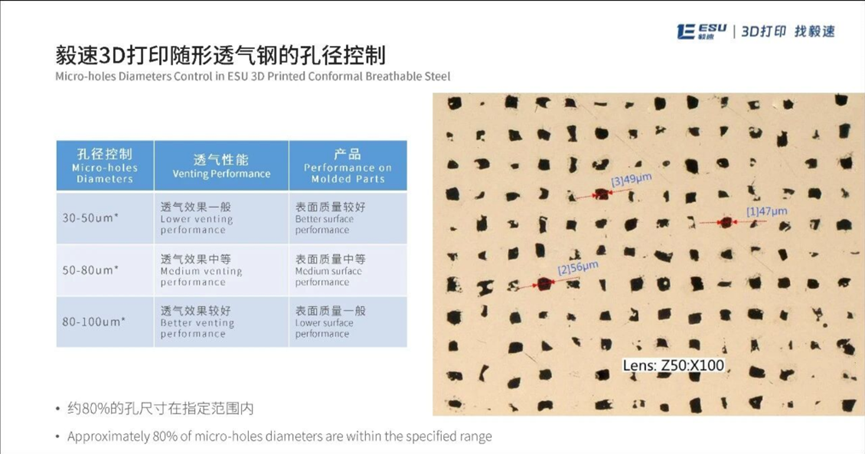
By integrating structural design, process tuning, and specialized materials,ESU Laser has elevated porous steel technology from “usable” to “precision‑controllable”.
➡️ In terms of structural design, ESU Laser has innovatively developed a composite layered structure design concept.Through multi-layer synergy and a special venting channel layout, it achieves high‑efficiency directional air exhaust,effectively prevents gas backflow, ensures part molding quality, and improves surface finish and stability.
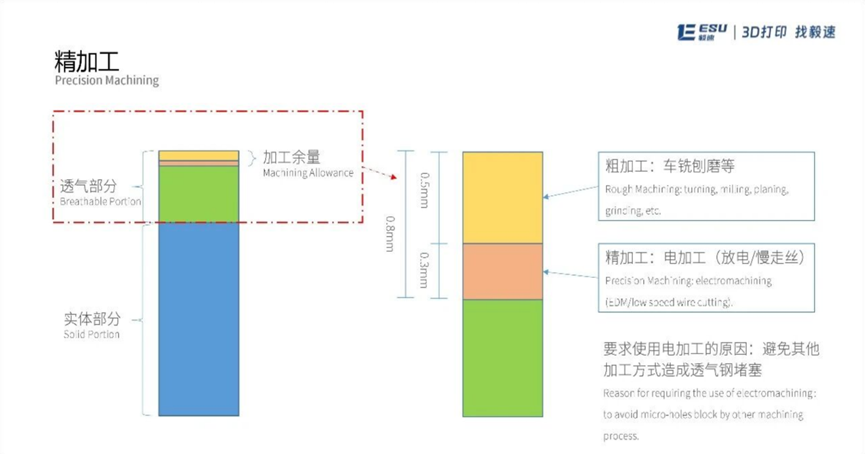
➡️ In terms of process, ESU Laser applies distinct manufacturing processes for the two layers of porous steel, enabling precision fabrication of pore characteristics and dimensions.
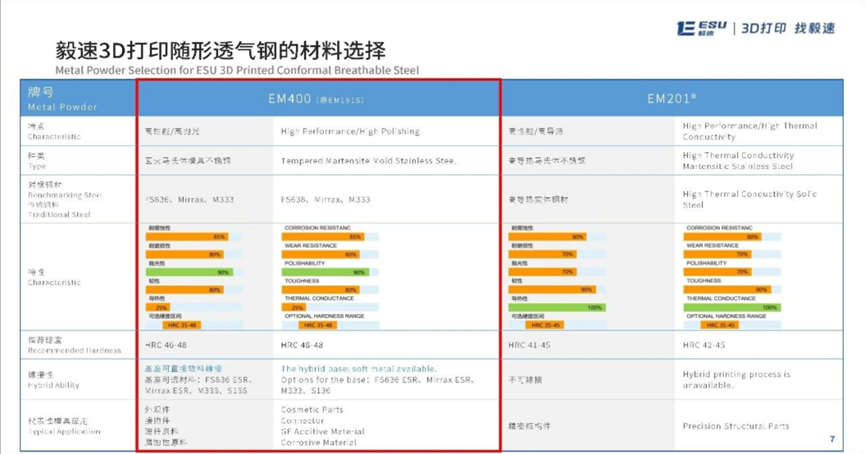
➡️ In terms of materials, ESU Laser has specially developed two materials: EM400 and EM201.They not only ensure the formation of ideal pore structures during printing,but also provide the high strength, high hardness and corrosion resistance required for mold components.
Combining its specially developed processes, materials and structural design,ESU Laser has achieved several major breakthroughs in 3D-printed porous steel:
➡️ Monolithic PrintingIn the same printer and in a single build, different laser parameters are applied to different zones, realizing one-piece production with “local breathable, local dense” structure. This eliminates mold splitting and extends overall service life.
➡️ Conformal Air PermeabilityBreathable regions can be freely designed along the curved contours of the mold cavity, precisely placed where venting is needed. They can also be integrated with conformal cooling channels. One print solves both venting and cooling — nearly impossible with traditional mold making.
➡️ Highly Uniform AirflowESU Laser ensures that approximately 80% of pore sizes fall within a specified range, guaranteeing stable and uniform air permeability.
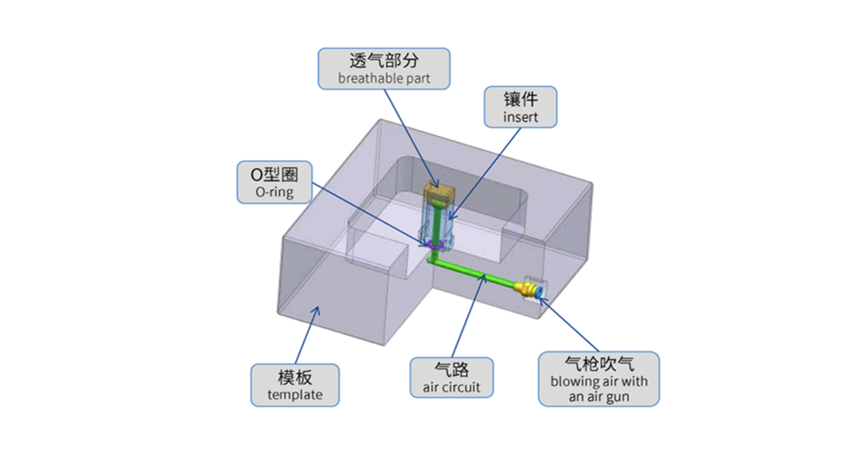
This shows that it is a systematic solution, not simply adjusting processes or retaining random pores to achieve effective venting.It must fully meet functional requirements in real production scenarios.ESU Laser states that it can achieve controllable air permeability in any pore size, any shape, and any region.
The author notes that ESU Laser has already showcased a wide range of applications for 3D-printed porous steel,including luminous emblems for automotive brands, industrial filtration, and robotic vacuum cleaners.
In one displayed case for an electric iron shell:
Traditional mold suffered from trapped air, resulting in a yield rate of 86%.
After adopting ESU’s conformal porous steel, the yield rate improved to 99.7%.
However, some users have raised concerns, with clogging being the most common question.ESU Laser points out that clogging rarely occurs as long as the maintenance guidelines are followed, and the company provides cleaning instructions.
Several key processing and maintenance tips are highlighted:
·Use EDM or wire-cut machining during processing
·Blow out residues at a suitable temperature
·Apply ultrasonic cleaning
3D-Printed Porous Steel to Debut at TCT Asia Exhibition
From March 17 to 19, ESU Laser will showcase its 3D-printed porous steel at TCT Asia, Booth 7E102.
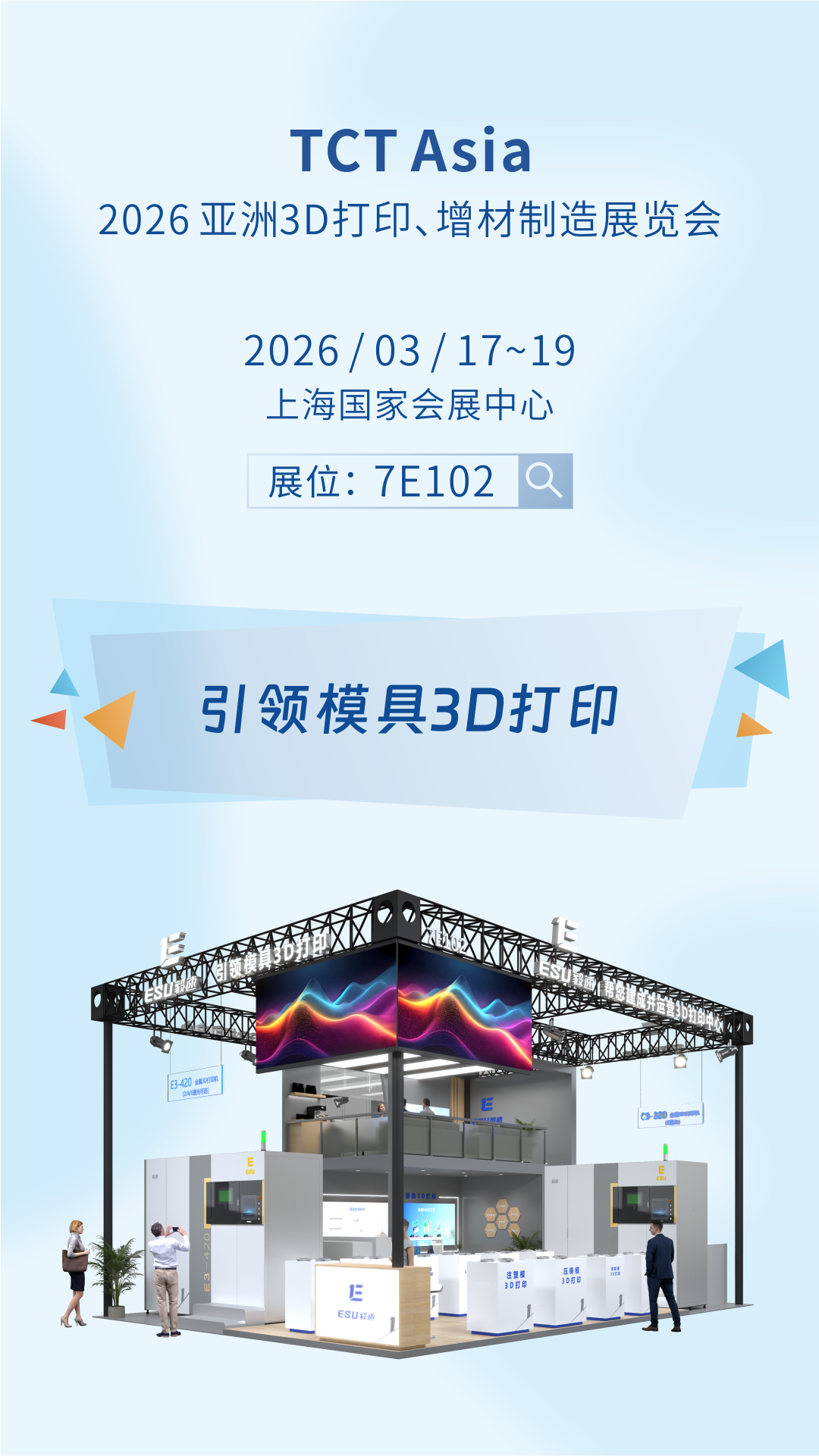
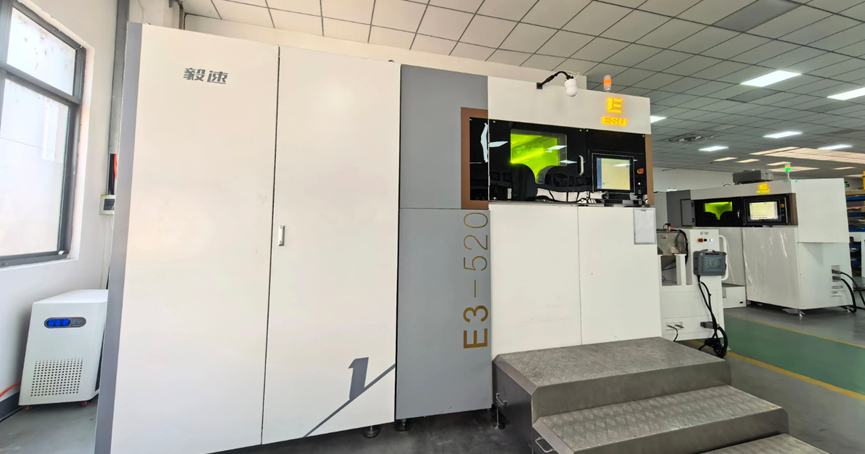
At this exhibition, ESU Laser will showcase its E3 Series metal 3D printers.The system adopts a multi-laser architecture (2, 4, or 6 lasers optional), with build volumes of250×250×320 mm, 400×400×420 mm, and 400×400×520 mm respectively.
Equipped with a mold-dedicated 3D printing process package and rapid grafting function,it enables mold enterprises to achieve quick adoption and high-efficiency application.
In addition, it is noted that ESU Laser was granted a patent in 2025 forlarge-format 3D printing airflow field technology.This technology allows the E3‑420 model, under an 80 μm large layer thickness printing mode,to achieve simultaneous improvement in both build efficiency and mold quality.
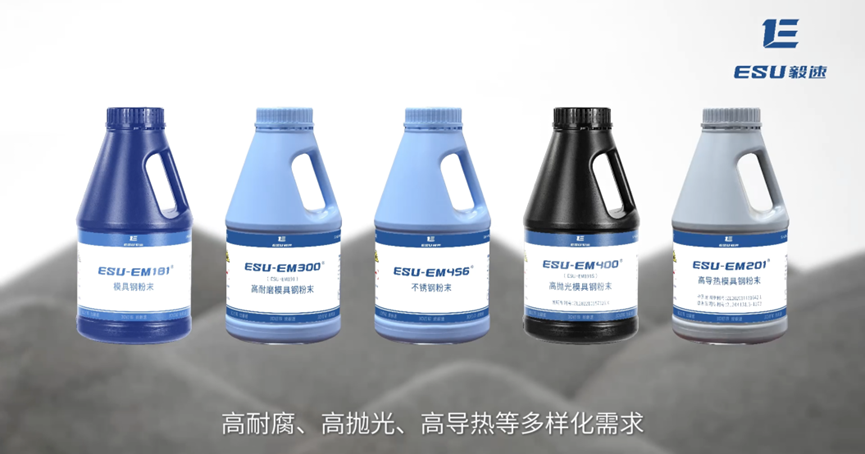
Another highlight of ESU Laser is the material portfolio specially developed for the mold industry,each with distinct outstanding properties:
EM400: Achieves A1‑grade polishing finish
EM201: Thermal conductivity up to 80 W/(m·K)
EM213: Impact toughness as high as 35 J
END
ESU Laser’s practice is a typical example of how domestic metal 3D printing enterprises transform process characteristics into product competitiveness. It turns potential hazards of metal 3D printing into advantages that differentiate additive manufacturing from traditional manufacturing technologies, demonstrating the company’s capability in cross-domain technological R&D and integration.
Currently, ESU Laser provides a six-in-one metal 3D printing service solution, including printing equipment, materials, processes, printing services, subtractive manufacturing, and also assists traditional mold factories in establishing additive manufacturing centers. “Understanding both 3D printing and molds” is not just a simple slogan for this company!








Copyright©2019-2026 Shanghai ESU Laser Technology Co., Ltd Copyright
沪ICP备19032964号-1
Public Security Filing 31011602001891号
The commercial promotion of goods or services directly or indirectly to consumers on this website is considered as "advertising" (excluding product information such as packaging, parameters, and after-sales support),
and our company reserves the right to interpret it within the legal scope.